Business Continuity: How to Avoid Downtime and Data Loss
How can businesses restore their backup data without incurring downtime and loss? Let’s quickly go over a brief description of a Business Continuity.
What is Business Continuity?
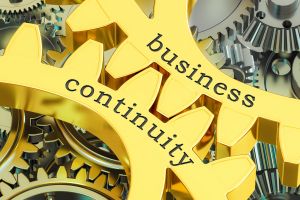
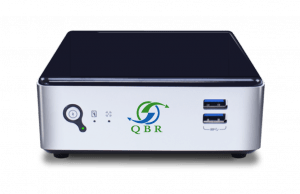
A Business Continuity solution is the combination of the latest backup technology and advanced processes to will ensure the business continues as usual in case a disaster strikes. It comprises of a BDR hardware device, could be a really small depending on what’s needed. It can extract and backup complete computer systems, both on a virtual and a physical machine, and can store it on both on the equipment itself and in cloud storage.
The company will benefit from double security. If something happened to the real hardware device, the data could be quickly restored from the cloud.
The goal of business continuity is to reduce downtime and reduce recovery time so that business processes do not interrupt or stop.
The top causes of downtime
Let’s look at some common causes of downtime and the costs associated with this business interruption:
- Human error – accidental deletion/change to data continues to be a key driver for data loss, impacting productivity specially if workers must spend time repeating previous work.
- Ransomware attacks, malware, data corruption – data can be lost or damaged due to malicious cyber-attacks, or through hardware/software faults.
- Hardware failure – despite improving hardware reliability, laptops still last on average just 3 years, making data loss due to sudden hardware failure a reality.
- Hardware theft or loss – as the workforce becomes more mobile, it is more likely devices such as laptops are lost or stolen.
- Environmental events – we hear more and more about natural disasters and the impact they have on businesses. Whether it is fire, water damage, or a tornado, you need to put safeguards in place to protect clients’ business data.
It’s important to put your business’ security first, even if you think the chances of a disaster striking your company are unlikely, you never know what can happen. Eliminate data loss and downtime costs with a Business Continuity solution like QBR and get that peace of mind you always wanted.
Having a simple, secure, automated way to protect and recover business data can reduce the risk of data loss.
How to choose a Business Continuity Solution
Finding the right Business Continuity solution for your company isn’t always easy. However, if done correctly, your critical company data will be secure 24/7 and easily restorable in case of a disaster. Even if unexpected disasters, such as fires, floods, or simply equipment failures, are unlikely, your business should always be prepared for them.
Here are 5 key points to look for when selecting a Business Continuity solution:
1. It should backup and restore files easily, with a simple and quick implementation process and a flexible upgrade policy.
2. The solution should provide multiple recovery points, in order to go back in time and have the option to restore from any given backup. On top of this, these recovery points should be compressed and stored on its own hardware storage device.
3. It should be able to export the backups as HyperV or Vmware files for deployment on any virtual environment.
4. It should offer a quick and efficient “bare metal” restore; which is the process of restoring a complete “virtual machine” sitting on the local device into a physical machine.
5. It should be a hybrid solution, that is based on virtualization, both on the local device and in the “cloud” (hybrid solution); this entails a backup done of a whole physical or virtual machine into one file and sent to the “cloud” after compression and encryption.
When selecting your Business Continuity solution, it’s also important to look at the specifications of the technology as well as the vendor. When you find a business continuity solution that has all of these key points and specifications, like the QBR solution, your business will be able to meet or exceed your Recovery Time Objective (RTO).
Do not risk your business! Choose the safest and right insurance to back up and restore your data with QBR.
Contact us today!
 No less important is the training of ERP and CRM users, because they are aimed at solving complex business problems. Whether an implemented IT system or business application becomes a productive and useful tool for a company, directly depends on the well-organized training for end users.
 This training method is optimal for organizations where the number of users working constantly with the new system is limited to several tens. The method is most effective in terms of the quality of education. Computer room user training is also recommended if the majority of employees do not have practical experience in using the automation systems. In this case, it is recommended to conduct full-time training with practical exercises. Based on our experience, such a format is most often used to educate a workgroup first.
 This method is optimal for organizations with 100-200 users (it could be in case of ECM implementation). This training method is less effective than the previous one, but at the same time, it retains the ability to ask questions and get answers to them in real time. It is recommended to make a video recording of the training seminar, so in the future, end-users can refer to it and refresh their knowledge.
 Webinar end-users training is optimal for companies where the number of users is several hundred and more and/or employees are geographically detached.
 This method also has no restrictions on the number of end-user and the time of training. Training videos demonstrate the standard functionality of the system, without taking into account any additional modifications for a specific customer. Therefore, it can be recommended to those companies whose business processes fit into the standard functionality of the system or have been adapted to the system.
 The use of online learning tools (for example, based on
  Many businesses, without a proper business continuity and disaster recovery plan and solution, don’t recover from some disasters. So, before you think to yourself, “well we have beautiful weather here or we hardly ever get power outages, why should I pay for a Business Continuity Service?” – remember that your company is much more likely of falling victim to a ransomware attack, having an employee accidentally delete an important file or dealing with a malfunctioning server. No matter what sudden disastrous event occurs, you want to be protected. Ask yourself, is my company’s data worth risking? You may have gone the last 10 years disaster-free but can you truly guarantee that the next 10 years will also be free of crisis?
 We all keep hearing about
  QBR
QBR
 Investing in
  Source: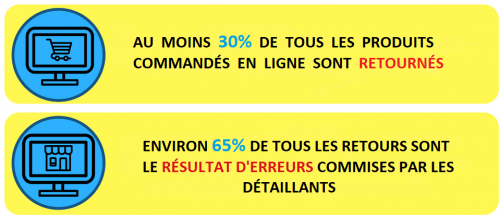
 In my opinion, the above statistics, reflecting e-commerce product returns, seem frightening. Is it possible to reduce the above percentages? Can your online business avoid these mistakes?
 For e-commerce, up-to-date information on the availability of goods is very important. That’s why one of the main EDI requirements for Amazon is the supplier’s ability to transmit an EDI 846 message. This is not just a requirement exclusive to Amazon; other major retailers such as