We compiled a short list of business technology terms that are useful to keep on hand when looking for software solutions for your business or when speaking with an IT Service Provider. We grouped them in 4 categories – ‘Cloud’, Software, EDI and Business Continuity. Check out the 2-part infographic below: Read more
Posts

It’s difficult for SMEs to find a ‘middle ground’ solution when it comes to EDI translation & communication. When looking to get started using EDI, there are currently three options:
– buy an EDI translator, targeted to developers
– go with a large EDI Vendor to outsource your EDI communication
– do it all from scratch, in-house Read more
 Companies are relying more and more on technologies and for good reason. The power of software automation and integration can enhance a company’s overall efficiency and improve B2B and B2C relationships. One such example comes with the integration of EDI and eCommerce Read more
Take a look at today’s Infographic that goes on to briefly describe how companies can get started using EDI Communication with their customers/suppliers/partners.
Every company needs to analyze their EDI requirements first and foremost to determine which solution or service will be needed to easily and securely exchange documents with their Trading Partners. To learn more about EDI Communication, visit EDI2XML. Read more
Businesses are constantly exchanging documents like invoices, purchase orders, advance ship notices, acknowledgements, etc. Many small and mid-size companies tend to still exchange these important documents via email, fax and even mail. Unfortunately, these methods take more effort and time to get to the business partner – which means that orders will be processed later and payments will take longer.
In today’s business world, everything is so fast-paced and competition is fierce. Customers and business partners demand the very best, in the shortest amount of time. It can get tricky for small businesses that may not be well equipped to compete with these larger players and provide the best service for their customers and business partners as everything is still done manually. This is where EDI communication comes in Read more

EDI Communication is an electronic communication method used by businesses typically in a B2B environment. It is used to exchange data via electronic means. Many companies today unfortunately still send purchase orders or invoices via email, mail or fax. This would then entail employees to manually input this information into their system. Many errors are likely to occur at that point which can eventually lead to late and/or wrong shipments to customers. EDI has eliminated many supply chain inefficiencies and has provided accuracy and timeliness when it comes to order processing. Read more
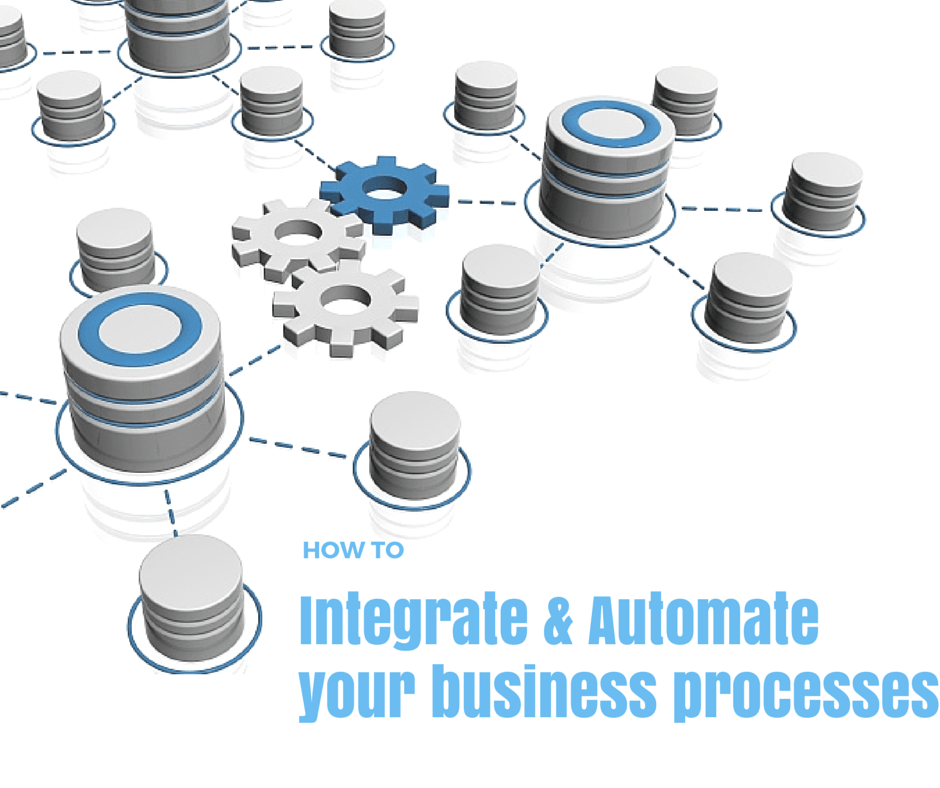 First, let us define these two terms:
System Integration: process of linking together many different software applications. This will allow employees to use ONE single management system, rather than using a separate system for every department/location/business function.
IT Automation: process of creating a seamless, continuous self-regulated workflow, where no human intervention is required. Read more
 Many companies that sell to big-named retailers get told to implement EDI in order to do business together. Often times, when this happens, the supplier begins to question if it is worth it to comply with the customer’s request to use EDI in order to begin trading electronically.
Our advice to you is; YES. Read more
 It’s always difficult to know what your business needs in terms of IT software without having seen or tested other systems. On top of this, we are all creatures of habit; once we get used to working a certain way, we do not question it, as it becomes second nature. However, this can be detrimental to a business. Only once a company begins to experience growth, expansion or a rapid sales increase, do they realize there is too much inefficiency that can prevent them from growing. More often than not, it is those companies that have not upgraded or changed their legacy system in years, or have no system at all, that will be affected the most. Read more
What exactly is ERP and why is it so valuable?
ERP Definition = ERP stands for Enterprise Resource Planning, which is a fully integrated software suite. It allows users to view, manage and track core business processes and resources using one single database, all in real-time. Read more

Latest Blog Posts
 Shadow AI: The Hidden Risk Inside OrganizationsFebruary 25, 2026 - 9:46 pm
 EDI Services in Canada: A Local Expert with 25+ Years of Integration ExperienceJanuary 30, 2026 - 8:53 pm
 How to Protect Your Business with Three Essential Levels of CybersecurityNovember 7, 2025 - 8:13 pm