Beyond Spreadsheets: What Is a Business Operations Platform?
A business does not have to be large to have a lot of information to manage.
A one-person company selling a single product may need to track orders, inventory, customers, sales, purchasing, and future demand. A small distributor may manage hundreds of products and several customers. Another business may work with a major retailer and use EDI (Electronic Data Interchange) to exchange orders and other business documents.
These businesses look different, but their operational needs can overlap.
In many small and mid-sized businesses, important information is spread across spreadsheets, accounting systems, EDI portals, email, and other tools. The challenge is keeping that information accurate and making sure that changes in one part of the business are reflected where they are needed.
As a business adds customers, products, or processes, more people and systems may become involved. The underlying issue remains the same:
Business information is difficult to manage when it is disconnected.
Business Operations Are Connected by Nature
The day-to-day activities of a business rarely happen independently.
A product is sold. An order is created. Inventory changes. Sales data is updated. Purchasing may need to respond. Future demand may need to be reviewed.
The information behind one activity is often useful in another.
Consider a simple example. A customer places an order for a product. Someone needs to know whether the product is available, how much inventory remains after the order, and whether additional stock may be needed.
When these details are maintained in different places, people have to connect them manually.
That might mean checking a product list in one spreadsheet, looking at inventory in another, reviewing the order in an EDI portal, and then updating sales or forecasting information somewhere else.
The individual steps are simple.
The repeated data entry is where the work begins to add up.
Small Businesses Can Have Disconnected Processes Too
It is easy to associate operational complexity with larger companies, but a small business can face the same basic problem.
A solo business owner may manage one product and two customers.
There may be a spreadsheet for inventory, an accounting application for financial records, email for customer communication, and another file for sales planning.
The business is small. The information is still connected.
The owner may know every customer and every product personally, yet still spend time checking several places to answer a basic question such as:
How many units do I have available, what has already been ordered, and what might I need next month?
A business does not need hundreds of employees or thousands of transactions before connected operational data becomes useful.
Spreadsheets Are Often Part of the Journey
Excel and Google Sheets are practical tools for many businesses.
They are inexpensive, flexible, and familiar. A business can create a product list in minutes, build an inventory tracker, analyze sales, or prepare a simple forecast without a software implementation project.
For some companies, that is exactly what they need.
The difficulty appears when the spreadsheet becomes responsible for information that is constantly changing and also needed by other business processes.
For example, a product quantity may change after an order is received. If that order lives in one system and the inventory figure lives in a spreadsheet, someone has to make sure the two remain consistent.
The same can happen with pricing, product information, sales figures, purchasing plans, and forecasts.
The spreadsheet itself is rarely the real issue.
The issue is the manual work required to keep different sources of information aligned.
EDI Can Improve External Transactions While Internal Work Remains Manual
For some SMBs, this challenge becomes more visible when they start doing business with larger retailers, distributors, or other organizations that require EDI.
EDI allows companies to exchange structured business documents electronically with trading partners. Orders, shipment information, invoices, and other transactions can move between companies without relying on email attachments or manual re-entry.
That can remove a significant amount of administrative work.
But EDI mainly addresses communication between businesses.
What happens after an EDI order arrives still depends on the company’s internal processes.
Imagine a small supplier receives a purchase order through EDI.
The order is available electronically. Someone still may need to check the product record, review current inventory, update internal sales information, and consider whether additional stock will be required.
If those processes are handled through separate spreadsheets and applications, the company can end up with an interesting situation: the transaction with the customer is automated, while the work behind the transaction remains largely manual.
For many SMBs, this is an important technology gap.

The Need for Better Operations Does Not Automatically Mean ERP
When businesses start looking for a way to bring their information together, ERP software is often part of the conversation.
An ERP can be the right choice for companies that need a broad, integrated system across areas such as finance, supply chain, manufacturing, human resources, and other enterprise functions.
But SMBs do not all have the same requirements.
A small business may be looking for a focused set of capabilities:
- product management
- inventory management
- order management
- sales visibility
- demand forecasting
- EDI and trading partner connectivity
It may also want to adopt those capabilities gradually rather than undertake a large transformation project.
This is one reason the idea of a Business Operations Platform is gaining relevance for smaller businesses.
What Is a Business Operations Platform?
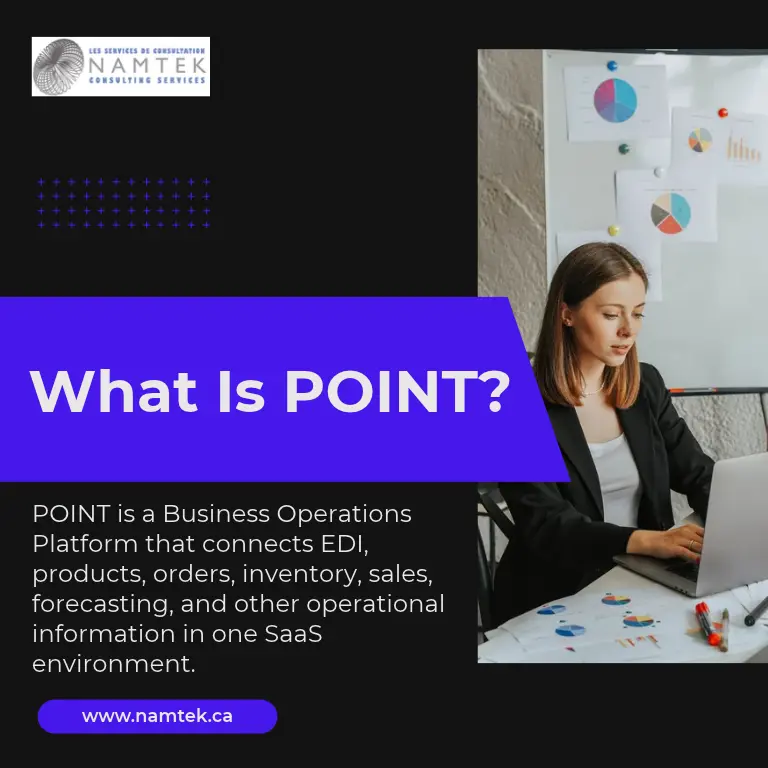
A Business Operations Platform is a SaaS platform that connects the products, orders, inventory, sales, forecasting, and other operational information a business uses to run its day-to-day activities.
Instead of managing these areas separately, a Business Operations Platform brings related information and processes into one connected operational environment.
Depending on the business, this can include product management, inventory management, order and sales management, demand forecasting, EDI, and connections with customers or trading partners.
The value is not simply having several business functions in one platform. The important part is how those functions work together.
Product information can support order processing.
Orders can affect inventory.
Sales data can contribute to forecasting.
EDI transactions can feed information into internal operational processes.
When these relationships are connected, businesses can reduce repetitive data entry, keep information more consistent, and get a clearer view of their day-to-day operations.
A business can also start with the capabilities most relevant to its needs and add others over time.
Connected Operations Can Start Small
A connected operational environment does not have to begin with a large implementation.
A business may start with product and inventory information.
Another company may need order management first.
An EDI-enabled supplier may want to connect incoming customer orders to product and inventory data.
A small business focused on seasonal sales may be more interested in forecasting.
These are different starting points, but they all involve information that needs to stay current and useful across business activities.
A SaaS platform can make that possible without requiring every business to adopt the same configuration.
Why Product, Orders, Inventory and Forecasting Belong Together
The relationship between these areas is straightforward.
An order is created.
A product is sold.
Inventory changes.
Sales information is recorded.
That activity creates data that can support future planning.
For example, if a company knows what products were ordered, what is currently in stock, and how sales have changed over time, it has more useful information for deciding what to purchase or produce next.
Without connected data, preparing that information may require combining several spreadsheets and systems.
With connected data, those relationships can become part of the normal business workflow.
That can save time, reduce repetitive entry, and give the people running the business a clearer view of what is happening.
Introducing POINT
Namtek and EDI2XML are developing POINT, a SaaS platform positioned as a Business Operations Platform for small and mid-sized businesses.
Namtek has provided IT consulting and business technology services since 2000, and EDI2XML, its sister company, specializes in EDI and business document integration. POINT builds on this combined experience by bringing operational data and business processes into a broader SaaS platform for SMBs.
POINT is built around five areas:
P — Product. Managing products and the information associated with what a business sells.
O — Operations. Supporting the workflows and activities involved in managing day-to-day business operations.
I — Intelligence. Using AI-powered capabilities to analyze operational information, support demand forecasting, and help with business decisions.
N — Network. Connecting businesses with customers, trading partners, EDI environments, and other business networks.
T — Technology. Providing the digital foundation for managing and automating everyday business operations.
The idea behind POINT is to give SMBs a more connected operational environment without making company size the deciding factor.
A business can be small and still benefit from better product and inventory management.
An EDI customer can use connected operational data alongside its trading transactions.
A growing company can add capabilities as its needs change.
And a business that does not use EDI can still use the platform for its core operational needs.
Different Businesses Can Reach POINT in Different Ways
There is no single starting point.
A business currently relying on Google Sheets may begin by organizing product and inventory information.
A company already using EDI may want to connect customer orders with internal inventory and product data.
A business working with another EDI provider may be interested in a broader platform that combines EDI with business operations.
USEFUL: How to Change Your EDI Service Provider
Another company may have no EDI requirements at all and simply want a better way to manage products, orders, inventory, sales, and forecasting.
The common need is connected information.
Knowing When Business Processes Need More Structure
There is no specific number of employees, products, or customers that determines when a company needs a more connected operational system.
For one business, the trigger may be repeated manual inventory updates.
For another, it may be difficulty keeping order information and stock levels aligned.
For an EDI-enabled company, the problem may be the amount of work required after an electronic order has been received.
Sometimes the signal is simply that the owner or operations team spends too much time answering questions by checking several files and applications.
These are operational problems, regardless of company size.
Recognizing them early can give a business more options when choosing how to improve its systems.
Building Better Business Operations Over Time
Most SMB technology environments develop gradually.
A spreadsheet is created for inventory. Accounting software is added later. A CRM may follow. EDI is introduced when a major customer requires it. Another spreadsheet appears for forecasting.
There is nothing unusual about this progression.
The opportunity comes when a company begins looking at how those tools fit together rather than considering each one separately.
Products, orders, inventory, sales, forecasting, and EDI are all connected to the way a business operates.
A more connected SaaS platform can bring those relationships into one operational environment and reduce the amount of manual work required to maintain them.
That is the direction behind POINT – a Business Operations Platform being developed by Namtek and EDI2XML for SMBs.
The goal is simple: give businesses a practical way to manage the information behind their daily operations and create a stronger foundation for whatever comes next.
See POINT in Action
Still managing products, inventory, orders, sales, or forecasts across spreadsheets and separate systems?
POINT is being developed as a SaaS Business Operations Platform for small and mid-sized businesses that want a more connected way to manage their operations.
We are currently offering live product demonstrations for businesses interested in exploring the platform.
Contact Namtek to schedule a POINT demo and see how a connected approach to business operations could work for your company.
Frequently Asked Questions
What is a Business Operations Platform?
A Business Operations Platform is a SaaS platform that helps businesses manage and connect operational activities such as products, inventory, orders, sales, forecasting, and business connectivity.
Is a Business Operations Platform only for growing businesses?
No. A business does not need to reach a specific size before connected operations become useful. Even a one-person business can benefit from having product, inventory, order, and sales information organized in a connected environment.
Is POINT an ERP?
POINT is positioned as a Business Operations Platform, not as a traditional ERP. It is being developed as a modular SaaS platform for SMBs that want connected operational capabilities.
Can POINT be used without EDI?
Yes. EDI is one part of the broader platform concept. A business can use POINT for product management, inventory, orders, sales, and forecasting without requiring EDI.
Can EDI be connected to inventory and product data?
Yes. Connecting EDI transactions with product and inventory information can reduce manual data entry and allow customer orders to support internal operational processes.
What types of businesses can use a Business Operations Platform?
A Business Operations Platform can be relevant to small manufacturers, distributors, wholesalers, suppliers, retailers, and other SMBs that need to manage products, orders, inventory, sales, forecasting, or business connectivity.